
Root canal treatment is a contemporary branch of dentistry that offers support and help to all who wish to keep their natural teeth for life
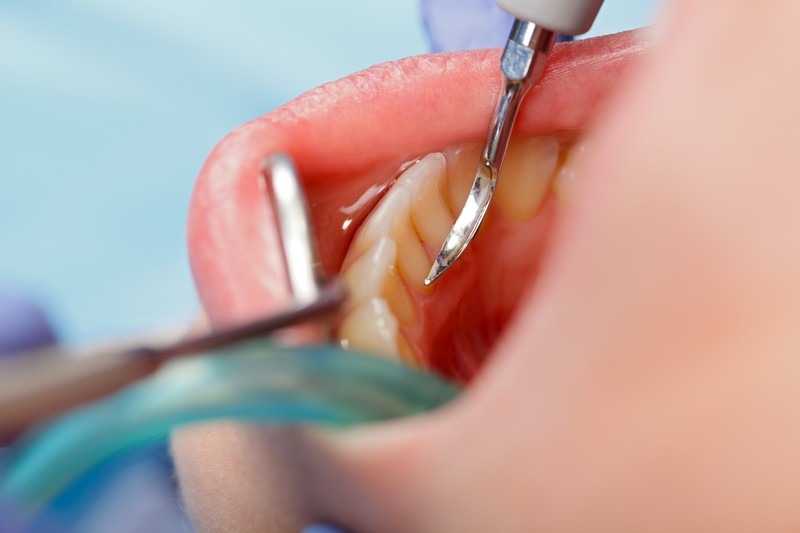
Deep within a tooth is soft tissue called the pulp. If the pulp becomes infected it is necessary to remove this and clean and disinfect the inside of the tooth before filling the root. This will prevent infection spreading to the bone and importantly will also ensure that the tooth can be retained, usually indefinitely. Thus, the need for replacement teeth such as implants, dentures or bridges can be avoided.
A root filled tooth is a ‘natural’ implant and usually requires much less ‘after-treatment’ than repairing a space with an implant, a denture, or a bridge. Root fillings save teeth!
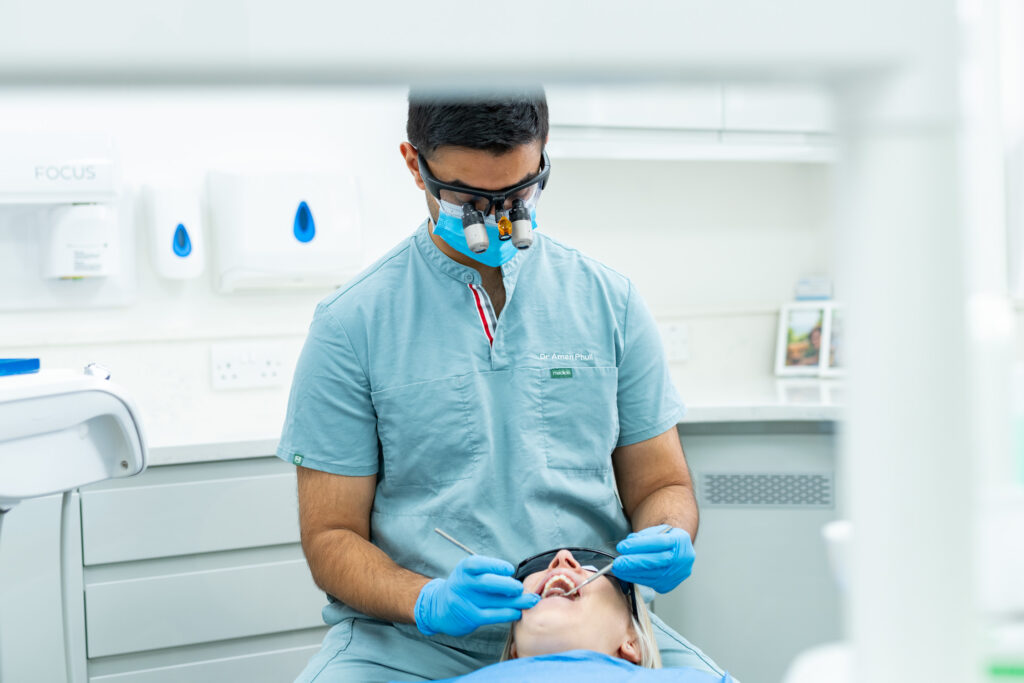
Root canal treatment at Chalfont Dentist is led by Dr Aman Phull, a dentist with a special interest in endodontics (root canal treatment). Aman holds a Postgraduate Diploma in Endodontics from the University of Chester and an MSc in Aesthetic and Restorative Dentistry, awarded with Distinction, from King’s College London. He is a member of the British Endodontic Society and helps teach root canal techniques to other dentists at FreshDental Institute, in collaboration with SimplyEndo.
Treatment is carried out under a dental operating microscope, using modern rotary instruments and 3D filling techniques, with CBCT 3D scans where needed to reveal anatomy a standard X-ray can miss. Your comfort comes first throughout, and sedation is available if you feel anxious.
Treatments Aman provides:
Patients can book directly, and dentists are welcome to refer complex cases.
Learn more about Dr Phull’s root canal care →
 Dr Aman Phull is a member of the British Endodontic Society.
Speak to our team today — no pressure, just honest advice.
Often root canal treatment is completed in one appointment but sometimes two or three visits may be necessary.
With proper restoration and care your tooth it may last a lifetime after root canal treatment. Proper dental care includes regular brushing and flossing, proper diet and periodic dental health checks.
With the use of modern techniques, root canal therapy typically involves little or no discomfort. Often there is pain before treatment and endodontic therapy provides relief.
Cleaning the root canals may cause some slight tenderness but usually over-the-counter pain killers alleviate the discomfort. If pain persists or if you experience severe pain, call your dentist.
The expense of an endodontic procedure varies depending on how severe the problem is and the type of tooth Molars with two or three canals are more difficult to treat and the fee will therefore be more. Endodontic treatment is usually more economical in the long term than any other alternative treatment.
The alternative to endodontic treatment is extraction of the tooth. Loss of a tooth could create a functional problem such as chewing or an aesthetic problem. Restoring the lost tooth may involve the provision of a prosthetic replacement such as a denture, bridge or a dental implant the costs of which are variable.
Occasionally a tooth cannot be saved. Endodontic treatment can be performed only if the root canals are accessible and can be adequately cleaned and sealed. The tooth must also have sufficient bone support. We only carry out treatment where we can give a good long term outlook.
The tooth will require a permanent filling and/or crown to cover and protect the tooth for the long term.
Endodontic treatment can have success rate of up to 90% in general if carried out to a good standard allowing the tooth to remain in function. Problems can occur if the tooth develops decay or the restoration on the tooth fails, or on occasions despite good care the tooth may not heal as expected. Further endodontic treatment or surgery may be carried out if appropriate. A tooth that develops a crack can also be a cause of failure and may result in loss of the tooth.
Teeth that have had endodontic (root canal) treatment can last as long as natural teeth, however, in some cases the treatment can fail or symptoms can persist. This may happen shortly after the treatment has been performed or even years following the treatment.
In these cases it may be possible to carry out the treatment again, a procedure called endodontic retreatment.
If you have questions before or after your treatment, please do not hesitate to get in touch.
Quick answers from Dr Naresh
Have a question or ready to book an appointment?
Get in touch with our friendly team — we’re here to help.
01753 888000
info@chalfontdentist.co.uk
15 Lower Road Chalfont St Peter Gerrards Cross Buckinghamshire SL9 9AL
Your details are safe with us and will only be used to respond to your enquiry.We never share your information with third parties.
Your privacy
We use analytics cookies to understand how visitors use our website, so we can keep improving it. They are only set if you accept. You can change your choice at any time using “Cookie settings” at the bottom of every page. Read our privacy policy.